Jade Tiki Tiles - Windows of Jade: The Ancient Roots and Mid-Century Revival of Glazed Tiles
By Scott Southworth · July 20, 2026
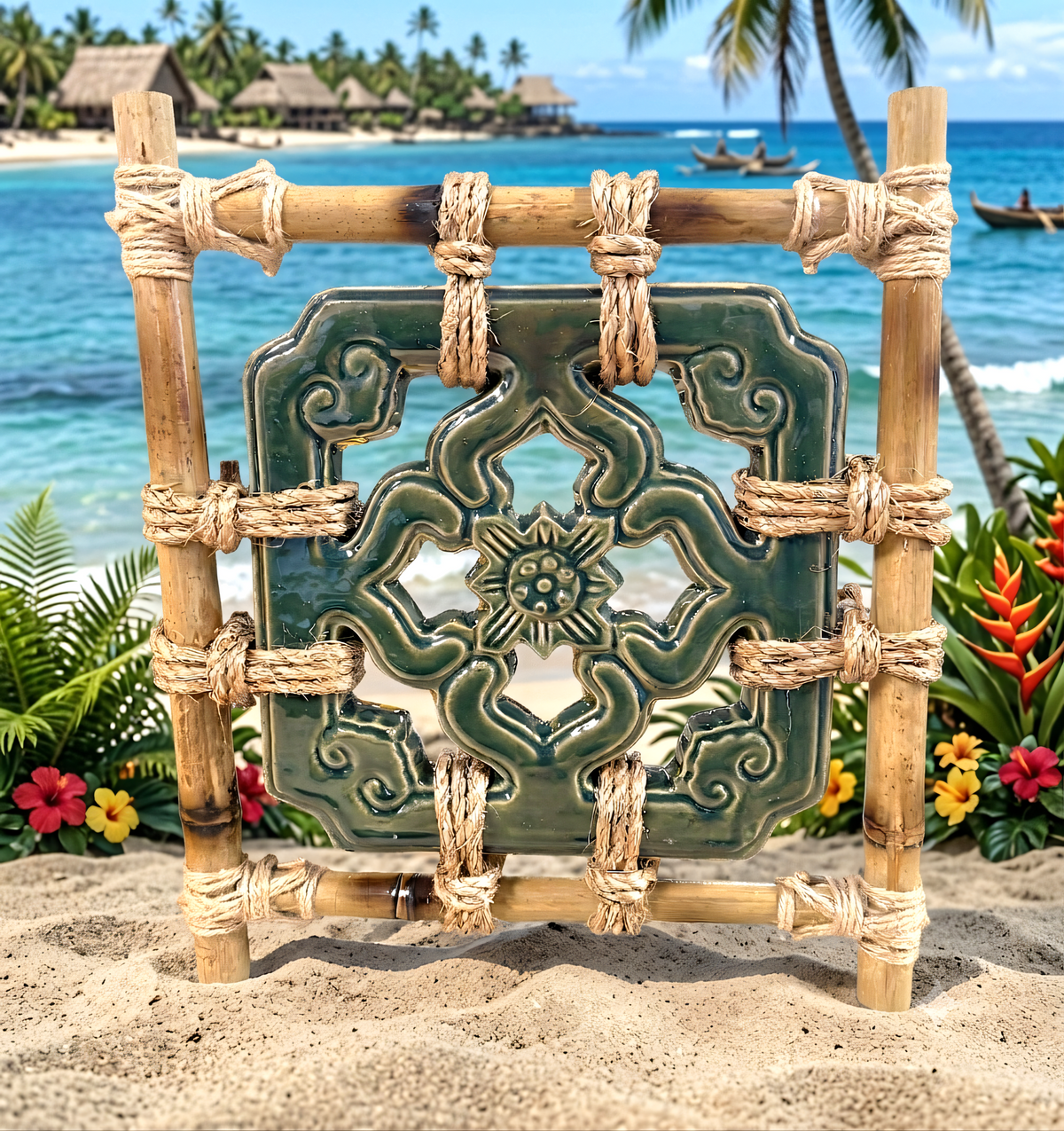
If you visited a high-end tiki bar or tropical resort in the 1950s or 60s, you likely encountered them: vibrant, emerald-green ceramic tiles arranged in geometric screens. Known variously as jade breezeway tiles, glazed breeze blocks, or lattice screen tiles, these translucent-green architectural elements cast cool shadows, let ocean breezes pass through, and added a touch of exotic luxury.
While mid-century modern design embraced these tiles, their story did not begin in a 1950s California studio. It began centuries earlier in the royal gardens and courtyards of ancient China.
Part I: The Scholar's Garden (The Origins of "Leaking Windows")
To trace the roots of the jade breezeway tile, one must look to classical Chinese architecture, particularly during the Ming (1368–1644) and Qing (1644–1912) dynasties.
In traditional Chinese garden design—most famously seen in the historic city of Suzhou—courtyards were bounded by high whitewashed walls. To keep these enclosed spaces from feeling claustrophobic, architects devised openwork wall screens called Louchuang (漏窗), literally translating to "leaking windows" or "glimpse windows."
           [ TRADITIONAL LOUCHUANG CONCEPT ]
 ┌──────────────────────────────────────────────────┐
 │                                                  │
 │   Whitewashed Wall       Glazed Ceramic Tile     │
 │  ┌────────────────┐    ┌────────────────────┐    │
 │  │                │    │   Geometric        │    │
 │  │   Solid Masonry│    │   Lattice Pattern  │    │
 │  │                │    │  (Air + Light)     │    │
 │  └────────────────┘    └────────────────────┘    │
 │                                                  │
 └──────────────────────────────────────────────────┘
These screens served three essential functions:
-
Passive Climate Control: They allowed cross-ventilation through humid courtyards while blocking harsh, direct sunlight.
-
Framed Views (Jiejing): They offered partial, teasing glimpses of the garden beyond, encouraging a visitor to explore.
-
Symbolic Language: The lattice patterns weren't random; they formed intricate cultural symbols—wheels for motion, coins for prosperity, or bamboo lattices for resilience.
Initially crafted from wood or carved stone, these screens evolved as Chinese ceramic artistry reached its peak. Potteries began casting hollow lattice blocks out of earthenware and porcelain. To protect them against moisture and add brilliant color, artisans coated them in rich, copper-oxide glazes. When fired, these glazes melted into deep, glossy green finishes that mirrored the most revered stone in Chinese culture: jade.
Part II: The Symbolism of Jade and Glaze
In traditional Chinese thought, jade was far more than a precious gem. Confucius wrote that jade possessed virtues analogous to moral perfection: its smoothness represented benevolence, its durability represented intelligence, and its translucency represented honesty.
                       [ CERAMIC GLAZE ]
                               │
            ┌──────────────────┴──────────────────┐
            ▼                                     ▼
     [ Copper-Oxide ]                     [ Firing Process ]
   (Yields rich greens)                 (Creates glass-like shine)
            │                                     │
            └──────────────────┬──────────────────┘
                               ▼
                    [ JADE-GLAZED TILE ]
              (Emulates the sacred stone of China)
Actual jade (nephrite or jadeite) was too hard and rare to be carved into massive building walls. Ceramicists solved this by creating jade-glazed stoneware. The glossy, deep green finish mimicked the look of carved imperial jade while providing a weatherproof, easily washable surface.
For centuries, these jade-green ceramic tiles adorned the partition walls of tea houses, courtyard gardens, and temple grounds across Guangdong, Fujian, and beyond.
Part III: Crossing the Pacific (The Mid-Century Tiki Craze)
The jump from traditional Chinese gardens to 20th-century American architecture happened mid-century.
In the post-WWII era, returning servicemen brought back a fascination with the South Pacific and East Asia. This gave rise to Tiki Culture—a whimsical, theatrical blend of Polynesian, Hawaiian, and East Asian design aesthetics. Visionary restaurateurs like Don the Beachcomber and Trader Vic began constructing elaborate tropical escapist temples across North America.
To create intimate, secluded dining booths without building solid, dark walls, architects looked to Asia for inspiration. They imported authentic glazed ceramic screen tiles directly from brickworks and artisan kilns in Southern China and Hong Kong.
| Feature | Concrete Breeze Block | Jade Glazed Ceramic Tile |
| Material | Cast grey concrete / cement | High-fired earthenware or porcelain |
| Finish | Matte, porous, paintable | Glossy, waterproof, glass-like glaze |
| Aesthetic | Industrial, minimal, geometric | Ornamental, rich, vintage luxury |
| Cultural Root | American Modernism (1950s) | Classical Chinese Louchuang (Ming/Qing) |
These jade tiles offered an immediate upgrade over standard grey concrete breeze blocks. Under warm tiki-bar lighting, the glazed jade surfaces shimmered like wet foliage or precious jewels. Iconic locations like the famous Mai-Kai in Fort Lauderdale used massive screens of these green imported tiles to separate dining areas while keeping the air flowing freely.
Part IV: The Rarity and Revival
As the tiki movement waned in the late 1970s, many original suppliers ceased production, and thousands of vintage tiles were lost to urban demolition. For decades, sourcing authentic jade breezeway tiles meant scouring architectural salvage yards or recovering intact pieces from torn-down mid-century estates.
Today, these tiles are experiencing a major revival. Modern homeowners, tropical architects, and design enthusiasts recognize that the jade breeze tile is a timeless fusion of form and function:
-
Indoor-Outdoor Continuity: They break up space without blocking natural light, acting as semi-private partitions for patios, entryways, and garden walls.
-
Sustainable Design: By allowing natural breezes to pass through while diffusing harsh sunlight, they reduce reliance on artificial air conditioning—just as they did centuries ago in Suzhou.
-
Tactile Craftsmanship: Unlike flat paint or modern plastic screens, hand-glazed ceramic tiles possess subtle color variations, depth, and character that age beautifully over time.
The Heritage Behind the Screen
The next time you gaze through a jade breezeway tile, you are looking through a design thread that spans centuries. What might look at first glance like a fun piece of retro mid-century decor is actually an ancient architectural innovation—born in the quiet courtyard gardens of China, preserved through centuries of ceramic mastery, and cherished today for its timeless beauty.