Sourcing, Authenticating, and Restoring Vintage Mid-Century Rattan Furniture
By Scott Southworth · October 15, 2026
Few materials evoke the relaxed luxury of mid-century resort culture quite like rattan.
During the post-WWII boom of the 1950s, 60s, and 70s, designers embraced bent rattan, woven cane, and bamboo to bring an organic, tropical warmth into modern interiors. From the theatrical "Peacock" chairs of Hollywood Regency lounges to sleek Scandinavian-inspired dining sets and Italian lounge chairs, vintage rattan remains a staple of high-end vintage decor.
However, sourcing genuine mid-century rattan requires a sharp eye. Because woven furniture is uniquely susceptible to age, moisture, and poor DIY repairs, navigating the vintage market requires understanding the difference between materials, knowing what to inspect, and mastering basic restoration.
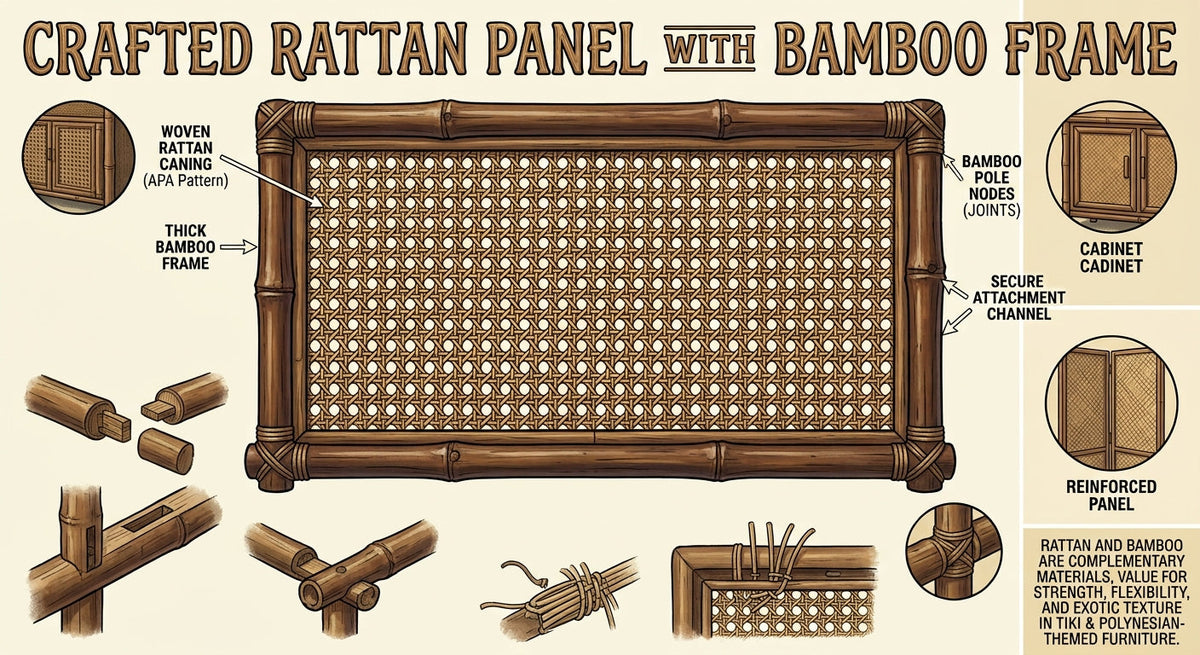
If you would like to add a handmade Bamboo Framed Jade Tiki Tile to your collection just click the link.
Part I: Material Clarification (Rattan vs. Bamboo vs. Wicker)
Before embarking on a search, it is essential to master the terminology. In estate listings and antique shops, seller labels are notoriously mixed up.
                     [ THE TROPICAL MATERIAL MATRIX ]
                                    │
      ┌─────────────────────────────┼─────────────────────────────┐
      ▼                             ▼                             ▼
 [ RATTAN ]                    [ BAMBOO ]                    [ WICKER ]
 Solid, bendable vine          Hollow, ringed grass         Style of weave
 Structural frames             Not steam-bendable            (Method, not a material)
-
Rattan: A solid, fibrous palm vine native to tropical regions. Because its core is solid (unlike hollow bamboo), rattan can be steam-bent into dramatic, fluid curves without snapping. It forms the structural poles and load-bearing frames of vintage chairs, tables, and headboards.
-
Cane: The glossy, smooth outer bark stripped from the rattan vine. Exceptionally tough, it is used for binding joints (cane wrapping) and open-mesh seating weaves (such as Marcel Breuer’s Cesca chairs).
-
Bamboo: A hollow, rigid grass marked by distinct raised nodes. Because it cannot be steam-bent into sweeping loops, vintage bamboo furniture consists primarily of straight-line joinery.
-
Wicker: A method of weaving, not a plant material. Wicker refers to the technique of weaving pliable materials (reed, willow, rattan core, or synthetic fibers) over a solid frame.
Part II: Where to Source Authentic Mid-Century Pieces
Finding high-grade mid-century rattan requires varying your sourcing strategy between local treasure hunts and curated online platforms.
                         [ SOURCING STRATEGIES ]
                                    │
         ┌──────────────────────────┴──────────────────────────┐
         ▼                                                     ▼
 [ LOCAL / VALUE HUNTING ]                             [ CURATED / HIGH-END ]
 • Estate Sales (Garages & Porches)                    • 1stDibs & Chairish
 • Thrift Stores & Flea Markets                        • Specialized Vintage Dealers
 • Facebook Marketplace & OfferUp                      • Live & Online Auctions
1. Estate Sales & Garage Digs
Because rattan was traditionally used in sunrooms, covered patios, and vacation homes, estate sale managers often overlook it. Always ask estate hosts specifically to check garages, basements, or sheds. Original mid-century owners frequently stored these pieces away when styles shifted in the 1980s.
2. Local Marketplaces & Thrift Stores
When searching online platforms like Facebook Marketplace or OfferUp, use vague search terms. Sellers often mislabel high-end Franco Albini or Paul Frankl-style pieces simply as "vintage wicker chair," "porch set," or "bamboo furniture."
3. Specialty Dealers and Live Auctions
For iconic designer attributions (such as Paul Frankl, Gabriella Crespi, Franco Albini, or Dirk Van Sliedregt), turn to vetted vintage dealers, high-end auctions, or dedicated architectural salvage shops. While prices are higher, these pieces are pre-authenticated and structurally vetted.
Part III: The 5-Point Quality and Authentication Checklist
Evaluating vintage rattan differs from judging solid hardwood furniture. Because woven furniture experiences stress at joints and bindings, apply this checklist before purchasing:
                     [ THE INSPECTION CHECKLIST ]
 ┌─────────────────────────────────────────────────────────────────┐
 │                                                                 │
 │   1. Joint Integrity      ──► Check cane wrapping & hidden screws│
 │   2. Structural Stability ──► Pressure test for flex/wobble      │
 │   3. Weave Condition     ──► Inspect stress points on seats      │
 │   4. Finish & Patina      ──► Differentiate original from paint │
 │   5. Odor & Mold Check    ──► Sniff for rot or trapped dampness  │
 │                                                                 │
 └─────────────────────────────────────────────────────────────────┘
-
Inspect the Cane Wrappings (Joints): The joints where thick rattan poles meet are wrapped tightly in leather or cane binding. Look closely for unraveling or missing section wraps. Minor unwinding is fixable, but widely unraveled joints mean the piece will lose structural integrity under load.
-
Test for Frame Wobble: Sit firmly in the chair or apply downward pressure to table edges. Authentic mid-century rattan frames should feel solid and slightly flexible, but not loose, creaky, or lopsided.
-
Check the Seat Weave (Primary Stress Point): On cane-seat dining chairs or woven lounger seats, examine the edge where the weave meets the wooden or rattan frame. This is the highest-stress area. Look for snapped strands or dry-rot cracks.
-
Evaluate the Patina vs. Painted Shells: True vintage rattan develops a warm, honey-golden or deep amber patina over decades. Avoid pieces covered in thick, drippy latex paint unless you plan to repaint them a solid modern color; stripping paint out of tiny woven crevices is virtually impossible.
-
The Moisture & Odor Test: Rattan is highly porous. Sniff the piece closely, particularly near the base and underside. A strong musty odor indicates internal mold or dry rot from being stored on wet concrete or left out in the rain.
Part IV: Cleaning, Conditioning, and Preservation
Once brought home, vintage rattan requires proper care to restore its luster and keep its natural fibers from becoming brittle and snapping.
                 [ CLEANING & CONSERVATION PROTOCOL ]
 ┌─────────────────────────────────────────────────────────────────┐
 │                                                                 │
 │   Step 1: Vacuum ──► Brush attachment to clear tight crevices   │
 │   Step 2: Wash   ──► Mild soapy suds (Do NOT soak the wood)     │
 │   Step 3: Dry    ──► 24-48 hours in a well-ventilated space     │
 │   Step 4: Oil    ──► Boiled linseed oil or natural beeswax paste│
 │                                                                 │
 └─────────────────────────────────────────────────────────────────┘
-
Step 1 (Dust Extraction): Use a soft brush attachment on a vacuum cleaner to remove decades of trapped dust from the woven crevices.
-
Step 2 (Gentle Washing): Mix warm water with a few drops of mild dish soap. Dip a soft bristle brush into the suds—do not submerge or saturate the rattan—and gently scrub the frame and weaving. Wipe down immediately with a clean, damp cloth.
-
Step 3 (Thorough Drying): Allow the piece to dry completely in a warm, well-ventilated area for 24 to 48 hours. Trapped moisture will quickly sprout mildew or mold.
-
Step 4 (Nourishing the Fibers): Dry natural rattan can snap. Rub a small amount of boiled linseed oil or a wood conditioning wax over unpainted rattan using a soft cloth. Let it absorb for several hours, then buff away the excess. This restores the natural amber glow and keeps the vine flexible for years to come.
The Timeless Appeal of Woven Design
Sourcing vintage mid-century rattan is an investment in organic craftsmanship. Whether pairing an arched bentwood etagere with modern minimalism or curating a tropical sunroom, these hand-formed, steam-bent pieces bring a tactile richness and historical charm that synthetic modern reproductions simply cannot match.