The Mai-Kai: The Cathedral of Polynesian Pop: The History, Architecture, and Cultural Impact
By Scott Southworth · August 25, 2026
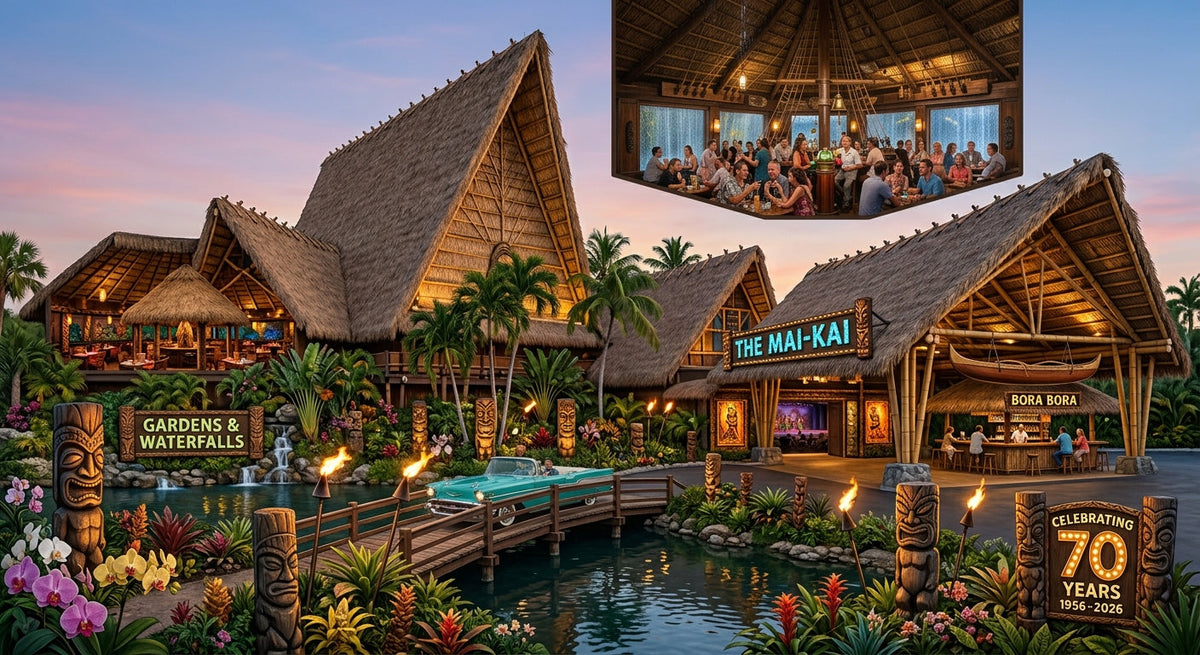
Step across the wooden plank bridge suspended over a orchid-lined lagoon, past the roaring water features, and through the heavy carved doors of The Mai-Kai in Fort Lauderdale, Florida. Instantly, the modern world vanishes, replaced by flickering tiki torches, hand-carved Polynesian tikis, the aromatic aroma of wood-fired ovens, and the distant sound of drums.
Opened in 1956, The Mai-Kai is not merely a restaurant; it is an immersive theatrical masterpiece and the ultimate surviving cathedral of mid-century Polynesian Pop culture.
Part I: The Origins and Vision (1956)
In the post-World War II era, returning Pacific theater veterans and a booming mid-century economy fueled an obsession with South Seas escapism. While California boasted Don the Beachcomber and Trader Vic’s, Florida brothers Bob and Jack Thornton envisioned creating something grander, more immersive, and more authentic than anything ever built.
                    [ BOB & JACK THORNTON ]
                               │
            ┌──────────────────┴──────────────────┐
            ▼                                     ▼
 [ ARCHITECTURAL VISION ]               [ MIXOLOGY EXCELLENCE ]
 Built $300,000 Tiki Palace             Hired Mariano Licudine
 (Most expensive restaurant of 1956)    (Don the Beachcomber master)
With an initial investment of $300,000—a staggering sum in 1956, making it one of the most expensive restaurant builds of its era—The Mai-Kai opened its doors on November 28, 1956. The Thornton brothers spared no expense, sourcing authentic Polynesian artifacts, hiring top-tier architects, and recruiting master bartender Mariano Licudine from Don the Beachcomber’s Chicago location to head their beverage program.
Part II: Masterclass in Tropical Architecture & Design
Designed by renowned Fort Lauderdale architect Charles F. McKirahan, The Mai-Kai’s physical structure was engineered as an architectural narrative of the Pacific islands. Rather than a single massive dining hall, the interior was meticulously divided into distinct, themed dining rooms wrapped around a central garden.
                          [ THE MAI-KAI LAYOUT ]
                                     │
         ┌───────────────────────────┼───────────────────────────┐
         ▼                           ▼                           ▼
[ THE MOLOKAI BAR ]          [ THEMED DINING ROOMS ]      [ TROPICAL GARDENS ]
Maritime shipwreck theme     8 distinct island rooms      Winding pathways, orchids,
with gas lanterns & rope     (Tahiti, Bora Bora, etc.)    torches & lava rock waterfalls
The Dining Rooms and Artifacts
The main building features eight individual dining rooms, each representing a different South Pacific region—including Tahiti, Bora Bora, Moorea, Hawaii, New Guinea, and Tonga.
-
Authentic Oceanic Art: The decor features museum-quality artifacts, including vintage Papua New Guinea masks, hand-carved Fijian war clubs, and original tikis carved by legendary mid-century artist Barney West.
-
The Molokai Bar: Modeled after a turn-of-the-century maritime vessel or shipwreck, complete with copper lanterns, heavy rigging, stained glass, and portholes displaying gentle water motion.
The Outdoor Tropical Gardens
Winding pathways lead guests through a lush outdoor garden featuring hand-carved lava rock waterfalls, bamboo bridges, carp ponds, and historic tiki sculptures. The garden served not only as a scenic backdrop for diners seated inside, but as a living botanical sanctuary showcasing exotic tropical flora.
Part III: Culinary and Mixology Legend
The Mai-Kai’s lasting reputation rests equally on its legendary Polynesian-inspired cuisine and its world-class cocktail program.
The Mixology of Mariano Licudine
Under Mariano Licudine's leadership, The Mai-Kai became famous for serving some of the finest tropical drinks in the world. Utilizing a secret, coded system of rum blends and house-made syrups, the bar served classics like the Derby Daiquiri, The Zombie, The Black Magic, and the iconic Mystery Drink—served in a giant bowl presented by a dancing server with a flaming orchid center.
Wood-Fired Chinese Ovens
The restaurant introduced authentic A-frame Chinese wood-burning ovens, where meats, ribs, and seafood were slow-cooked over hardwood oak logs. This unique culinary method infused signature dishes like the Peking Duck and BBQ Pork Ribs with a rich, smoky flavor profile.
Part IV: The Cultural Impact & Preservation
At a time when many mid-century Tiki palaces were demolished or modernized during the 1970s and 1980s, The Mai-Kai stood firm, preserving its original design, recipes, and Polynesian revue floor show—the longest-running running performance of its kind in the United States.
In 2014, The Mai-Kai was officially added to the National Register of Historic Places, recognizing its significance as an architectural and cultural treasure of American mid-century history.
1956: Opening ──► 1960s-70s: Expansion ──► 2014: Historic Register ──► Present: Preservation
Following extensive historic restoration efforts to protect its structural integrity and iconic decor, The Mai-Kai remains an enduring beacon of South Seas escapism—a living museum where visitors can step back in time and experience the golden age of Tiki culture.