The Steven Crane Story - The Man Who Found The Hawaiian Luau
By Scott Southworth · August 18, 2026
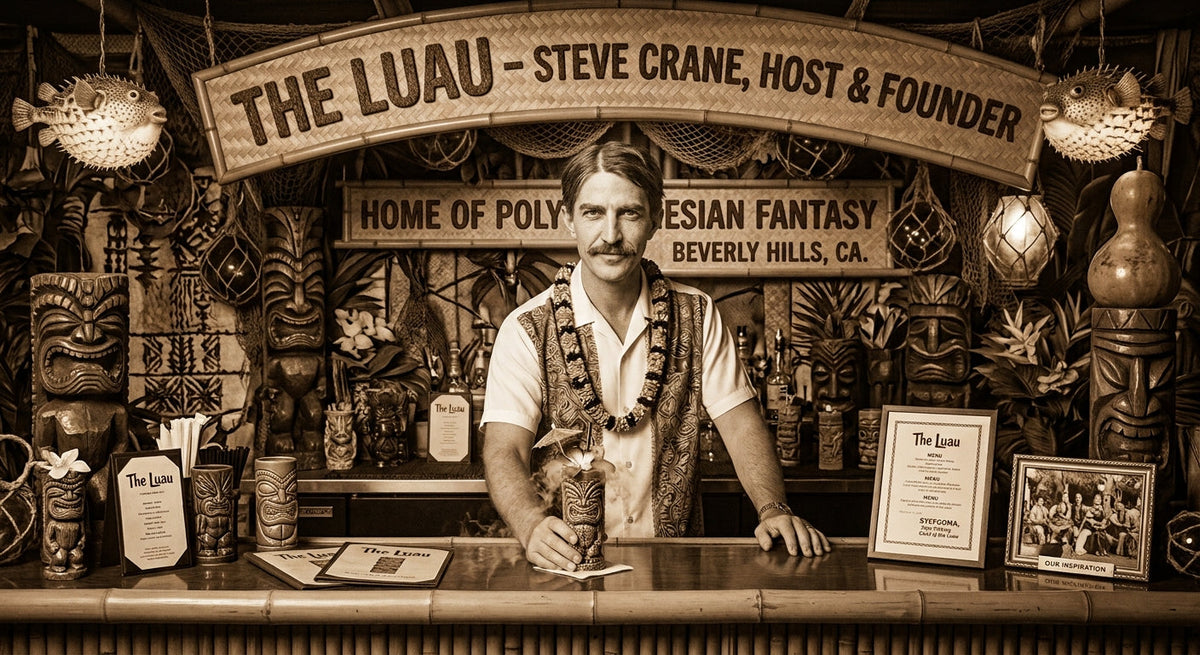
When people think of Stephen Crane, the image that usually comes to mind is stark, gritty, and intensely dramatic. He is the literary prodigy who penned The Red Badge of Courage at just 23 years old, crafting one of the most psychological, raw depictions of Civil War combat ever put to paper—despite never having seen a battlefield himself.
We picture Crane as the brooding, cigarette-smoking realist wandering the slums of Manhattan's Bowery or surviving a harrowing shipwreck off the coast of Florida that inspired his masterpiece The Open Boat.
Yet embedded in Crane’s short, whirlwind life is an incredible, often-overlooked chapter from his travels across the American West and Mexico in 1895: his encounter with Hawaiian culture, Polynesian feast traditions, and the magnificent, ritualistic reality of the traditional lūʻau.
Long before Hawaii became a U.S. state or mid-century tourists lined up for resort buffets, Crane offered Gilded Age readers a vivid, sensory-rich glimpse into an authentic Pacific feast—seen through the eyes of America's sharpest literary observer.
Part I: The Wandering Realist (1895)
In early 1895, Stephen Crane was riding a wave of sudden, dizzying fame. The Red Badge of Courage was being syndicated in newspapers across the nation, making him an overnight celebrity.
Eager to capitalize on his talent, the Bacheller-Johnson Newspaper Syndicate hired Crane to embark on a vast coast-to-coast reporting journey. His assignment: travel through the American West, Mexico, and coastal ports, sending back vivid travel dispatches that captured the true flavor of a rapidly changing continent.
                    [ STEPHEN CRANE'S 1895 JOURNEY ]
                                  │
      ┌───────────────────────────┼───────────────────────────┐
      ▼                           ▼                           ▼
[ Nebraska Blizzards ]    [ Texas & Mexico ]        [ Pacific Coast Ports ]
(Gritty pioneer life)    (Bandits & old trails)    (Hawaiian diaspora & ships)
Crane wasn't interested in romantic tourist fluff. He was a pioneer of literary realism and naturalism. When he arrived at coastal maritime communities and interacted with Pacific islanders, sailors, and Hawaiian expatriates living in major Pacific ports, he approached their culture with intense curiosity and profound observational respect.
When Crane encountered an authentic traditional Hawaiian feast—a lūʻau—he didn't see a mere party. He saw a complex, centuries-old ritual of community, gratitude, and culinary mastery.
Part II: The Anatomy of an Authentic Lūʻau
To understand what captivated Crane, one must understand how different an authentic 19th-century lūʻau was compared to modern commercial beach parties.
Historically known as a pāʻina or ʻahaʻaina, these royal and communal gatherings were renamed lūʻau in the 19th century after the tender, edible leaves of the kalo (taro) plant, which were wrapped around seasoned meats and slow-cooked in subterranean ovens.
The center of the entire affair was the imu—a deep earth oven lined with volcanic river rocks and heated by fragrant woods like kiawe or ironwood.
                  [ THE TRADITIONAL IMU (EARTH OVEN) ]
 ┌─────────────────────────────────────────────────────────────────┐
 │                                                                 │
 │   Layer 1: Deep Earth Pit filled with Hot Volcanic Rocks        │
 │   Layer 2: Damp Banana Stumps & Ti Leaves (Creates Steam)       │
 │   Layer 3: Kalua Pig, Kalo (Taro), Breadfruit, and Fish         │
 │   Layer 4: Woven Mats & Earth Mounded on Top (Traps Heat)       │
 │                                                                 │
 │        Result: Slow-steamed, tender, smoky perfection           │
 └─────────────────────────────────────────────────────────────────┘
For Crane, who was used to stiff, formal East Coast dining rooms filled with silver cutlery and rigid etiquette, sitting cross-legged on woven pandanus mats (lauhala) laid across the grass was a revelation.
In a traditional lūʻau, food was served directly on banana and ti leaves, eaten entirely with one's fingers—a practice that reflected a direct, intimate connection between the diner, the community, and the earth that provided the meal.
Part III: Crane’s Sensory Palette—Poi, Kalua, and Community
When Crane wrote about the feast, his signature style—characterized by vivid color imagery, sharp sensory details, and an eye for human interaction—shone through brilliantly.
He paid close attention to the traditional dishes that defined the gathering:
| Traditional Dish | Preparation & Ingredients | Crane’s Observational Reaction |
| Puaʻa Kalua | Whole pig seasoned with Hawaiian sea salt (paʻakai), roasted in the imu for 8+ hours | Marveling at the rich, smoky tenderness of meat cooked under earth and steam |
| Poi | Fermented paste made from pounded cooked kalo corm and water | Intrigued by its smooth texture and central role as the vital starch of island life |
| Lūʻau Chicken / Pork | Meats wrapped in tender young taro leaves cooked in coconut milk | Fascinated by the deep, earthy greens wrapping rich, savory bites |
| Poke & Lomi Iʻa | Fresh raw reef fish, salted salmon rubbed with fresh tomatoes and sweet onions | Surprised by the clean, vibrant freshness of cold ocean delicacies |
Crane was particularly fascinated by poi. While many uninitiated Western visitors struggled with the subtle, slightly tangy starch, Crane understood its profound cultural weight. To Hawaiians, poi was not a side dish; it was the living representation of Hāloa, the sacred ancestor. When a bowl of poi was open at the table, harsh words were forbidden, ensuring that peace and harmony (lōkahi) reigned over the meal.
                    [ THE SPIRIT OF THE FEAST ]
                                 │
         ┌───────────────────────┴───────────────────────┐
         ▼                                               ▼
  [ EARTHEN COOKING ]                             [ SOCIAL UNITY ]
(Imu, Ti leaves, Volcanic rock)               (No forks, shared mats, peace)
         │                                               │
         └───────────────────────┬───────────────────────┘
                                 ▼
                     [ THE TROPICAL LŪʻAU ]
Part IV: The Journalist as a Cultural Bridge
What makes Stephen Crane's dispatches on tropical traditions so compelling is his total lack of snobbery.
In late 19th-century travel writing, many American journalists wrote about non-Western cultures with condescension or exotic caricatures. But Crane was fundamentally different. As a writer who built his career documenting the lives of everyday workers, slum-dwellers, and frontline soldiers, he possessed an innate empathy for authentic human experience.
In his descriptions of Pacific gatherings, Crane highlighted:
-
The Generosity of Hospitality: How host families gave away their finest livestock and crops to ensure no guest departed hungry.
-
The Music and Chant: The hypnotic rhythm of traditional oli (chants) and hula, which he recognized not as casual entertainment, but as living oral histories preserving sacred genealogies.
-
The Equalizing Effect: How sitting together on the ground to eat stripped away social pretension, forcing kings, commoners, sailors, and writers to share the same air and food as equals.
The Legacy of Crane’s Dispatches
Tragically, Stephen Crane’s career was cut short just five years after his western and Pacific journeys. He died of tuberculosis in 1900 at the young age of 28.
Yet his travel sketches remain a masterclass in American journalism. Through his keen eyes and vibrant prose, Crane captured a snapshot of traditional Hawaiian culinary heritage right at a pivotal crossroads in history.
He showed his readers that a true lūʻau was never just about the food. It was an enduring celebration of ʻohana (family), lokahi (harmony), and aloha—a lush, unforgettable feast where the warmth of the earth, the fire of the imu, and the spirit of the community merged into a single, immortal story.